.png)

Jim Trealease, in his insightful and best-selling book The Read-Aloud Handbook, stated,
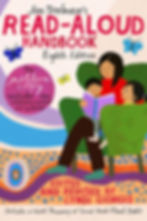
“The single most important activity for building the knowledge required for eventual success in reading is reading aloud to children.” That's a strong statement, but the importance of reading aloud to children cannot be overstated. Reading aloud to children models the practice of reading for them, including using reading strategies and reading with expression. It allows children to experience the enjoyment of reading without struggling through challenges of reading, teaching them to associate reading with pleasure. It helps them create background knowledge that they can then bring to new situations and experiences. It exposes them to rich vocabulary. In short, reading aloud to children matters.
I've talked to parents and teachers who are hesitant to read aloud to kids because they don't consider themselves "polished" readers. They think if they can't do special voices for characters or read with excessive emotion that their read-alouds might not be good enough. I'm here to tell you - this isn't true! Your read-aloud, in any form, is enough! Through the simple act of reading aloud to them, you are creating a special reading bond with your kids. Sure, special character voices are great, but not having them does not diminish the read-aloud experience at all. Be confident, pick up that book, and just enjoy the reading experience with your kids!

Do you already read regularly with your children but want to know how to up your read-aloud game? I've got some tips for you! Don't feel like you need to do all of these things for every book you read aloud. These are just some things you can start to consider and building into your read-alouds.
Practice some previewing strategies. Before reading a new book, show children the book cover and read the title to them. Ask them to predict what the book might be about based on the cover and title. If it's a chapter book, you could even read the back cover and then ask them to continue or revise their predictions. If children struggle to do this, you might model making predictions for them first. If you want to take this a step further, you could do a picture walk through the book, where you go through the whole book only looking at the pictures, not reading any words yet, to make predictions about what the book will be about.
Activate prior knowledge. Ask children questions to get them thinking about what they might already know about the book. Perhaps the book is on a topic that is familiar to them, or perhaps they have read another book that is similar. Help them make connections and begin thinking about that related knowledge that they already possess.
Read with expression. This will look different for everyone based on your own comfort level and ability with reading, but make it your goal to read as expressively as you can. This doesn't have to mean accents or special voices. Reading with expression involves pacing (steady pace, reading quickly when the action picks up, and reading slowly to build suspense), volume (for example, whispering or shouting), intonation (for example, rising pitch at the end of a sentence to indicate a question), phrasing (breaking sentences into understandable chunks or phrases as you read), and emotion (for example, sounding excited or sad to match the emotion of the story). You are modeling what good reading sounds like, so do your best to model expressive reading. This not only helps students understand and enjoy the book you are reading, but it also helps them learn to read expressively themselves.
Model reading strategies. During your read-aloud, find opportunities to model for your children what you are doing as a reader. You might make a connection, by saying something like, "Oh, that reminds me of another book we read..." You might pose a question like, "I wonder how that made the character feel." You might use context clues to determine a word's meaning. Don't allow this modeling to overwhelm the reading experience, but sprinkling a few strategies throughout your read-aloud can show children what readers do.
Ask questions during and after reading. Posing questions during reading can help to keep children actively engaged and thinking about what is being read. You could ask children to predict what will happen next, to make inferences, to consider how characters might feel, to make connections to other books or to their own lives, or to summarize a passage or a whole story. If you are reading with an individual child or a small group, you can ask them to share their ideas with you. If you're reading with a large group, this can be a good opportunity for children to share their thoughts with a partner or engage in think-pair-share. As with the reading strategies, you don't want these questions to overshadow the book itself, so choose your questions strategically and only do this a few times in a read-aloud session.

What about when kids get older? Once they can read books themselves, do they still benefit from being read to? YES! All of the benefits mentioned above still apply with older children! They still benefit from experiencing the enjoyment of reading, from getting to enjoy a story without having to work for it, from being exposed to new words and sentence structures, and from hearing a good reading role model read with expression and intonation. Don't stop reading to children just because they are capable of reading themselves. You can continue to read higher level texts to and with them. I still read regularly to my college students, and every semester, students talk about this on their course evaluations as one of their favorite parts of my classes. There is something enjoyable and soothing about hearing a good book, in addition to all of the other benefits for developing readers.
So pick up a book today and read it aloud to your children. Try to make this a regular part of your routine, whether you are a parent or a teacher. Find time in your daily schedule to read aloud. It's worth it!


I agree! I teach middle school, and my middle schoolers love being read to. I have been questioned about it before, but the research supports it!